Tuesday, 18 November 2014

Colour Theory

There are three useful colour categories, these are the colour wheel, colour harmony, and the context of how colours are used.


Color wheel
http://www.tigercolor.com/color-lab/color-theory/
color-theory-intro.htm#Color_Wheel

Colour Wheel 

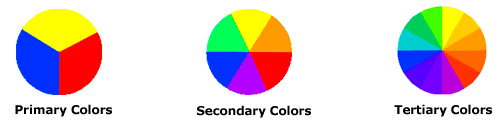
Primary Secondary Tertiary Colors
http://www.colormatters.com/colo
r-and-design/basic-color-theory


Warm and cool colors
http://www.tigercolor.com/color-lab/color
-theory/color-theory-intro.htm#Color_Wheel
The colour wheel is based on three colours, blue, yellow and red. This is known as the primary colours. They are the three colours that are pure pigment meaning they cannot be made by any other colours. They make all other colours. The secondary colours is made up off green, yellow, orange, blue, purple and red. Using red, yellow and blue you can make orange, purple and green. Tertiary colour wheel is made up of colours that are blended together. Yellow-orange, red-orange, red-purple, blue-purple, blue-green, yellow-green. These are mixed up of secondary and primary colours to form these tertiary colours.


There is also warm and cool colours, warm being the brighter more energetic colours, these are the reds, yellows, oranges, and the cool colours are the blues, greens and purples.


Colour Harmonies

Colour harmony is natures way of saying 2 or more colours go well together. That are pleasing on the eyes. 

Analogous Colours
Analogous colours are any three colours side by side on a 12 part colour wheel. 

Complementary Colours
Complementary colours are colours that are opposite each other on the colour wheel. 

Achromatic Colours 
Neutrals, blacks and greys are all classed as achromatic colours.

Chromatic Colours
Chromatic colours are the actual colours you see.

Monochromatic Colours 
Monochromatic colours are one shade of one colour.


Colour Context

How colours behave in relation to other shapes. 


http://www.sensationalcolor.com/understanding-color/theory/color-relationships-creating-color-harmony-1849#.VHDVu_msWSo
http://www.colormatters.com/color-and-design/basic-color-theory


Sunday, 9 November 2014

The Westmores

http://www.imdb.com/media/rm2510980608/tt1688059
The Westmores are renowned in Hollywood for Make up and Hair in motion picture. Starting with George Westmore who was an Englishmen who immigrated to the United States of America with his family. Originally a hair dresser he then took an interest in Make up and is now responsible for being one of, if not the most famous family in the make up industry. Still to this day the Westmores are practising Make up. During the peak of the first generation of Westmores they worked on many films and television under companies such as Warner Brothers and Universal Studios. As well as working with such big names they also opened their own company salon which also helped normal people with facial scarring, diseases or accidents etc all with the art of make up. The Westmores are a full family in show business with some of Georges granddaughters being actress, TV presenters etc. 

http://makeupmag.com/images/5322_MA_17_House%20of%20Westmore.jpg


http://www.filmreference.com/Writers-and-Production-Artists-Vi-Win/The-Westmore-Family.html

Saturday, 8 November 2014

Queen Elizabeth I in Film & Television


Fire over England - Flora Robson 


thttp://en.wikipedia.org/wik
i/Fire_Over_England
Fire over England is a 1937 film made in the UK and directed by William K Howard. Which was a portrayal of the relationship between England and Spain during the Spanish Armada during Queen Elizabeth I reign over England. Flora Robson portrayed Elizabeth I in the film.

http://www.imdb.com/title/tt0028872/

The Virgin Queen - Bette Davis
http://www.themakeupgallery.info
/period/c16/uk/elizabeth/virginbd.htm

The Virgin Queen is a film released in 1955 starring Joan Collins and Bette Davis. Bette Davis portrays Queen Elizabeth I and went to an extreme for the role and had her hairline shaved back 3 inches and her eyebrows shaved off as well. She really wanted to fool the audience into thinking she wasn't one of the most gorgeous actress's in Hollywood but in fact the real Queen Elizabeth I. This was helped by Make up artists Perc Westmore, Ben Nye and Hair styling by Helen Turpin.

http://www.imdb.com/title/tt0048791/

Elizabeth 1 - Cate Blanchett

Elizabeth (1998) Poster
http://www.imdb.com/media
/rm2306186752/tt0127536?ref_=tt_ov_i
This is a film based on the early years of Queen Elizabeth I and how the court wanted to marry her off and how she wanted to stay 'The Virgin Queen'. Elizabeth is portrayed by Cate Blanchett and the film was made in 1998. Directed by Shekar Kapur and written by Michael Hirst. Jenny Shircore was the hair and make up designer Anita Burger was the head Make up Artist.

http://www.imdb.com/title/tt0127536/


Elizabeth R (1971) Poster
http://www.imdb.com/m
edia/rm4133460992/tt0066652?ref_=tt_ov_i


Elizabeth R - Glenda Jackson 

Elizabeth R is a TV mini series made in 1971 starring Glenda Jackson as Queen Elizabeth which showed key moments of Elizabeths reign. The key make up artist for this was Dawn Alcock.


http://www.imdb.com/title/tt0066652/


The Virgin Queen (2005) Poster
http://www.imdb.com/media/rm
2045743616/tt0481459?ref_=tt_ov_i


The Virgin Queen - Anne Marie Duff

This is a 2005 biographical TV mini series which shows Elizabeth I whole life. From her reign to her 'affair'. Sjaan Gillings was the key make up artist for this TV series. Elizabeth is portrayed by Anne Marie Duff.

http://www.imdb.com/title/tt0481459/


Elizabeth I - Helen Mirren 

This is a TV mini series made in 2005
about the private life of Elizabeth I in her
later years, Elizabeth is portrayed by
 Helen Mirren.
Elizabeth I (2005) Poster
http://www.imdb.com/media/rm
194548224/tt0465326?ref_=tt_ov_i

http://archargent.tumblr.com/twhd


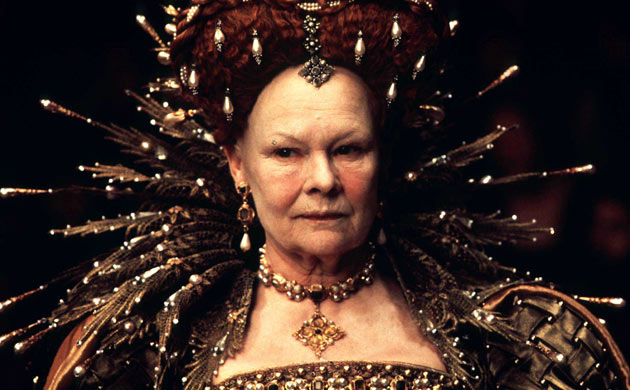
                               Shakespeare in Love - Judy Dench
                             
                               She has a very small part in this film compared                                to her normal roles but it is still significant.
                               This was made in 1998 and Lisa Westcott was                                the make up artist.
                                                                                   http://www.imdb.com/title/tt0138097/fullcredits?ref_=ttfc_ql_1

Tudor Cosmetics


Tudor Cosmetics were used by the Tudors and the Elizabethans as a sign of wealth, status and rank. Even in those times Make up was being used a camouflage and correcting to hide the scarring of various diseases and smallpox.  During the Tudor period Make up wasn't as big as in the Elizabethan time but perfume was. This was made with products such as beeswax, flowers, honey and different oils such as sesame seed oil. These products were introduced from the middle east, where they had got their ideas from the Egyptian times. In the Middle East they liked concentrating on the eye brows, eye lashes and eye lids as well well as cheek rouge and lip rouge.They also used a type of Henna to dye hair. Elizabeth I set the trends and fashion as she aged because the white make up she was known for was for hiding the wrinkles and scarring left from her younger years and to perceive to everyone she was still 'The Virgin Queen' and to maintain her illusion of beauty. 
The ideal Tudor/Elizabethan woman was fair skinned to show she didn't work out in the sun so therefore she wouldn't have a sun tan. As this then showed a sign of wealth Tudor men sought after woman with a pale complexion. Even apart from the caked white face, Elizabeth did have an outlook on make up of less is more, as everything else was too look naturally flushed like the lips and the cheeks rouge. 
http://beautifulwithbrains.com/wp-content/uploads/2010/05/Elizabeth-I.jpg
http://www.sixwives.info/tudor-make-up.htm

Thursday, 6 November 2014

Elizabethan Book Research


Fashions in Makeup from ancient to modern times 

By Richard Corson
Pages 101 -120

As Cosmetics, Make up and Hair had such an impact on Elizabethans during this historical time, I decided to research further into this time period by looking at two books. The first one is called Fashions in Make up from ancient to modern times by Richard Corson.

This book had a whole section on the Elizabethan period with quotes and knowledge from this era. During the Elizabethan times, Queen Elizabeth wore Red Wigs, red and white face paints exposed on her skin strongly and the older she got the more she applied to cover scars, age spots and wrinkles.
White led was used for the paint though powdered borax was preferred by some women. Ochre and mercuric sulphide were used also for cheek rouge and made into different colour shades. Cochineal was blended with gum arabic, egg whites and fig milk to produce rouges for lips. Other items used in cosmetics was Venetian turpentine, eggs, honey, lilies, shells camphor and crushed mother of pearl, musk and ambergris. Women of this time that did not want to use paints on their skin were told to bathe in their own urine with rose water with wine and lemon rinds and some women just simply wash their faces in water which beans had been boiled in.

Picture taken from book. Queen Elizabeth I in 1592 
Picture taken from book. Claudia of Beaune 1568
The eyebrows are plucked and the hair line is shaved.
Hair in the Elizabethan times was usually light colour or 'flaming heads' which meant Red heads these were dyed with coloured dyes which were made with leads and sulphurs to match Elizabeth's coloured wigs. They would add pearls and head pieces into the hair to show wealth, class and extravagance.

This book was a good read and gave me an insight into not just make up and hair during the Elizabethan times but a look into their general beauty regime. I believe this will be a helpful when researching for my final look.

Fashions in Hair the first five thousand years

By Richard Corson
Pages 171 - 177  196- 197

The second book, I looked into is called Fashions in Hair the first five thousand years by the same author as the first book I looked at. This book is slightly different as it focuses solely on hair, hair styling, hair tools and other hair related topics. This book is in depth because it has diagrams which are very useful because I think they will be a good reference when drawing hair designs later through out the semester. This book talks a lot about padding being used by the Elizabethans so the hair would be styled more flamboyant. Also the Elizabethans liked a middle parting, curls, braids, twists, chignons and normally they would use ribbons interlaced through these styles. Wigs became fashionable in the later part of the century with Queen Elizabeth I favouring tight curled red wigs and Mary Of Scotland had a larger collection and she preferred  the  winged or horn style wigs. Black hair was not fashionable and hair would be dyed and bleached to achieve lighter results. This trend started in Europe in such places as Italy and France and then was bought over to England.
Diagrams taken from book. Elizabethan hairstyles.